
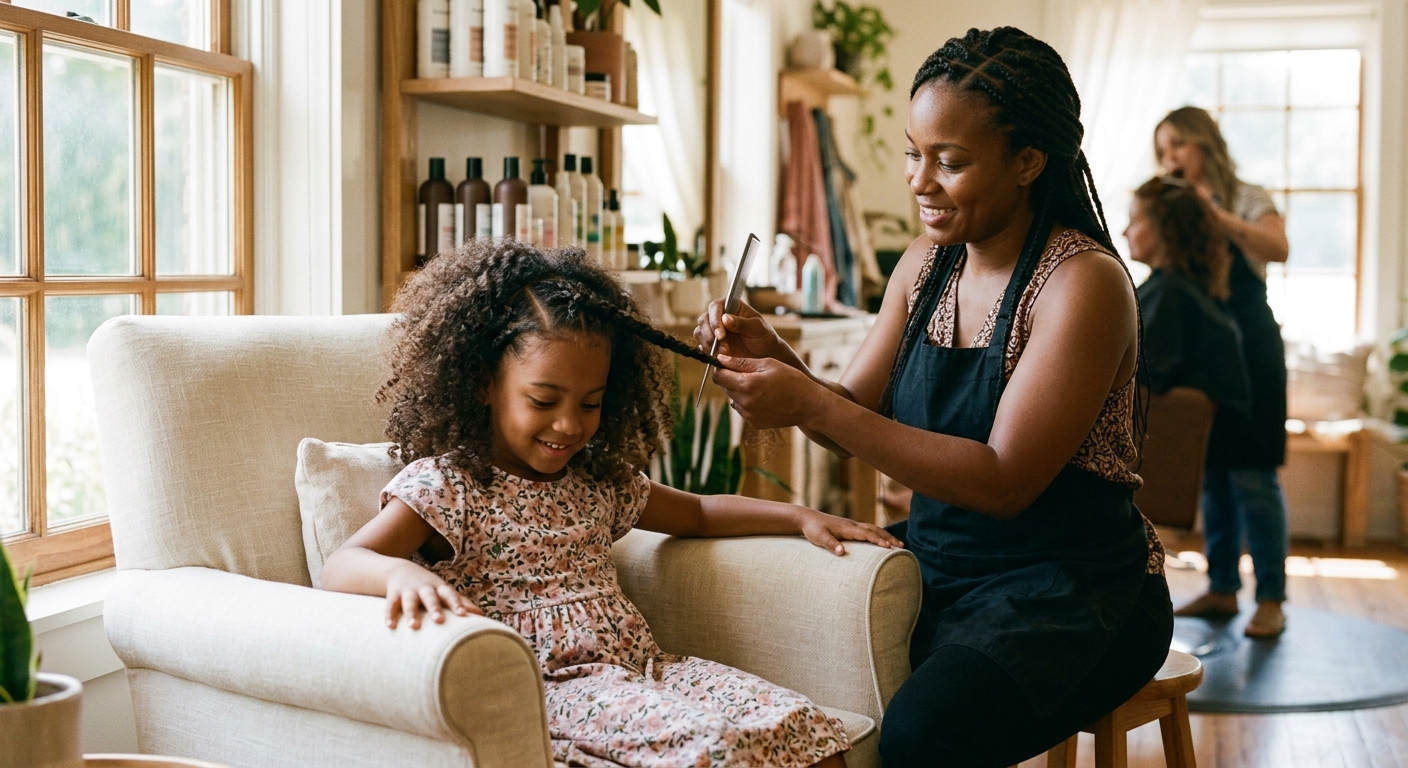
Braiding children’s hair should never hurt. For generations, families accepted tight pulling, sore scalps, and red bumps as unavoidable costs of neat protective styles. That tradition ends here. Your child deserves a calm, sensory-safe environment where comfort matters just as much as neat parts. Che built her private Jonesboro studio around this exact standard, specializing in tension-free cornrows, twists, and knotless braids for South Metro Atlanta youth. She even handles the entire wash and blow dry process (sparing you the exhausting Sunday night wash prep). Read on to discover how gentle kids braids near me protect young scalps and create tear-free salon visits.
Why Gentle, Sensory-Safe Styling Matters for Children
Tears at the kitchen table often begin before the comb even touches hair. For a child with a tender scalp, braid day triggers dread instead of excitement for a fresh look. Rough detangling and aggressive tugs turn regular upkeep into an ordeal. Does hair care have to hurt to last? No.
Tender Scalps and the Risk of Early Traction Alopecia
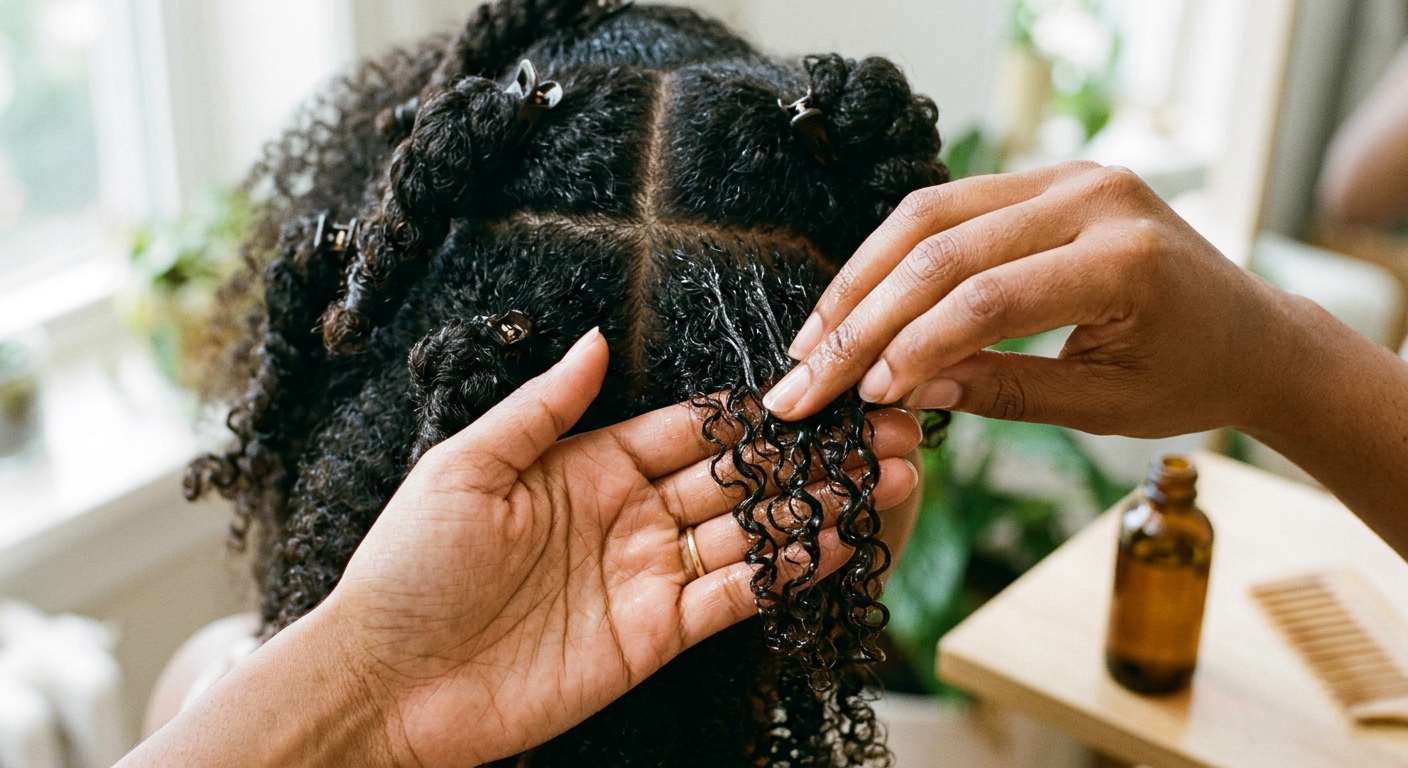
Excessive tension does more than cause immediate tears; it injures delicate hair follicles. When braiders pull tightly to produce crisp lines, that mechanical stress concentrates directly on fine perimeter edges (especially around the hairline and temples). Repeated strain leads to traction alopecia, a form of hair loss that can permanently damage follicles before a child reaches middle school. Safe protective styling must protect young follicles first.
Sensory Overload in High-Volume Salons
Busy commercial storefronts can overwhelm sensitive children. Roaring hooded dryers, shouted conversations, and rushed stylists (often pressured by double-booked schedules) create a chaotic atmosphere. A child who feels trapped in a loud styling chair easily shuts down or panics.
-
Unrushed detangling that honors physical boundaries
-
Gentle hands that never use excessive pulling to speed up installation
-
Quiet settings free from the noise and rush of multi-chair salons
Calm, sensory-conscious visits build positive routines that help children love their natural hair.
What Defines a Truly Gentle Kids Braid Salon?
Parents seeking gentle kids braids near me quickly discover that marketing promises rarely match actual salon technique. What separates ordinary appointments from deliberate, tender care? It comes down to mechanics and pacing.
Tension-Free Knotless Braiding Techniques
Traditional styles anchor synthetic hair with heavy knots directly against the scalp. Knotless braiding removes that initial strain. The braider starts solely with the natural hair, feeding tiny segments of extensions into the plait as it develops downward. This distributes weight evenly across the head instead of dragging on sensitive edges. Hand placement matters just as much. An experienced braider keeps hands relaxed, angles fingers to minimize pull, and adjusts immediately if a child flinches.
Full-Service Care and Thoughtful Pacing
Hair manipulation should never start on dry, stiff strands. Full-service care begins at the sink with a warm wash and deep conditioning treatment. Moisture softens the hair cuticle. From there, detangling proceeds in small sections with a wide-tooth tool, working deliberately from ends upward to the roots (the standard method for removing snarls without snapping hair fibers). A patient stylist maintains steady dialogue throughout the appointment:
-
Describing tools before touching the scalp
-
Offering brief pauses during longer passes
-
Checking tension around sensitive zones like the temples and nape
Finding a stylist who checks every one of these boxes can be challenging, but a dedicated private studio model makes all the difference.
The Slayy by Che Difference: A Calm, Private Studio Experience in Jonesboro, GA
Walk-in salons often overwhelm young clients with ringing phones, cross-chatter, and heavy foot traffic. Che operates a private suite in Jonesboro designed to counter sensory overload. Here, only one client sits in the chair at a time. The room remains quiet. Children can watch a favorite show, listen to soft music, or simply sit without background pressure.
A One-on-One, Low-Stimulation Environment
What does this calm setup change for a nervous child? It gives them breathing room. Che sets appointments so no child feels rushed through the door. (Parents often notice their children visibly relax within ten minutes of sitting down.) She pauses when a child needs a break, explains the steps before starting, and checks comfort levels on both boys and girls. Respecting those boundaries turns salon day into positive self-care rather than a stressful chore.
Cleansing and Gentle Blow Dry Included
Most parents dread the at-home prep stage. Washing, conditioning, and drying thick hair before an appointment often exhausts both parent and child before styling begins. Che handles the entire preparation in-studio through full wash and blow dry care.
Every kids appointment includes:
-
A thorough scalp cleanse and moisture wash
-
A hydrating steam conditioning treatment
-
A gentle blow dry on low heat
Children leave the chair with neat styling and healthy scalps. And parents get their weekend mornings back.
Top Sensory-Friendly Protective Styles for South Atlanta Children
Braiding day should never hurt. Choosing protective styles that respect delicate roots prevents physical discomfort entirely.
Lightweight Kids Knotless Braids and Cornrows
Knotless braids lay flat against the crown immediately (unlike older extension methods anchored with heavy knots). That design choice eliminates the lingering soreness that typically ruins bedtime after an appointment. Kids can jump in the car, lean back against headrests, and rest without throbbing temples. Is your child active in sports?
Classic cornrows with geometric, wide-base parts offer a durable alternative for soccer matches and busy school weeks. Tension stays balanced. Keeping the perimeter free from tight pulls protects baby hairs around the ears and nape. The result is a neat style that holds up through playground recess without pulling at tender skin.
Natural Two-Strand Twists and Safe Accents
Natural two-strand twists provide the softest hold for toddlers and kids with fine hair textures. Because twists use the child’s natural hair instead of heavy synthetic fibers, they preserve natural moisture and remain soft to the touch through busy weeks. They also unravel quickly when wash day arrives.
Children love expressing their personal taste through styling accents. You can add fun details without straining young neck muscles:
-
Lightweight wooden or acrylic beads installed at mid-length
-
Hollow metal cuffs that clamp loosely without pinching the strand
-
Colorful satin ribbons woven into the ends for holiday events
Giving young clients a voice in their styling choices builds early confidence.
At-Home Scalp Prep and Maintenance for Lasting Comfort
Home prep sets the tone long before your child sits in the styling chair. Familiar routines give young children a sense of agency over their personal space.
Preparing for the Appointment and Daily Moisture
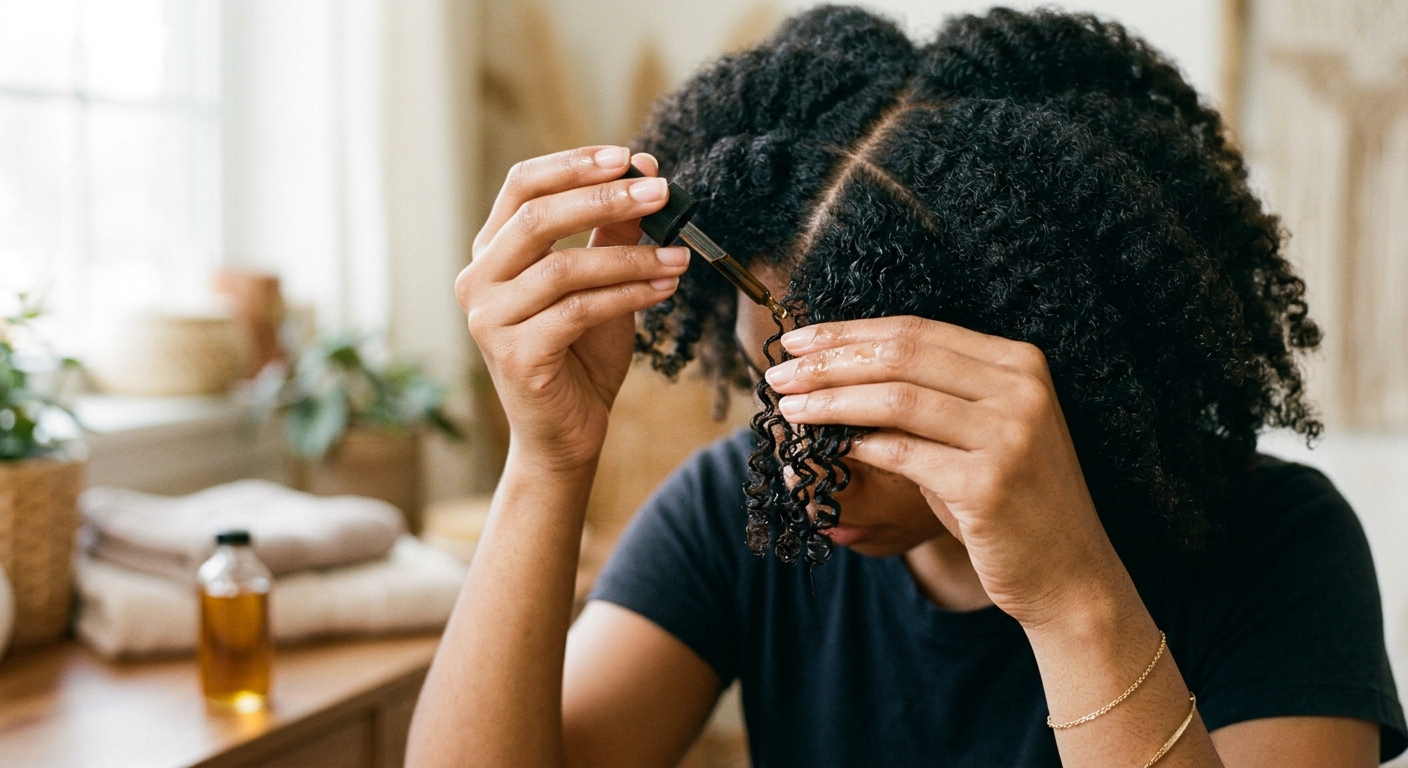
Talk through the appointment steps with your child two days ahead so they know what to expect. Predictability reduces anxiety. Pack a bag together with familiar sensory comforts, such as a favorite stuffed animal, a tablet loaded with downloaded shows, or small handheld fidget toys. Keep the scalp calm by lightly misting exposed parts with a soothing water-based spray twice each week. Follow that mist with a few drops of lightweight, non-comedogenic oil (such as jojoba or sweet almond oil) to seal moisture into the scalp without creating pore-blocking buildup.
Night Routines and Takedown Windows
Nighttime friction against standard cotton pillowcases pulls delicate edges and saps moisture directly from the hair shaft. Simple adjustments preserve the style and keep hair comfortable until the next wash day.
-
Night protection: Cover hair with a snug satin bonnet before sleep, or use a soft silk pillowcase if your child refuses head coverings.
-
Regular scalp checks: Inspect parting lines weekly for any sign of dry irritation or product residue that needs gentle cleansing with a damp cloth.
-
Takedown timeline: Unravel braids between four and six weeks. Leaving extensions in beyond six weeks traps naturally shed hair at the base, creating dense mats that hurt to detangle.
By partnering with an attentive specialist and following simple home habits, parents can say goodbye to tears on braid day for good.
Frequently Asked Questions About Kids’ Braids
What is the recommended age for a child’s first braided style?
Most children do well starting around age three or four. At this stage, children can comfortably communicate scalp feelings and sit for short intervals. Che assesses hair density and scalp sensitivity before recommending simple styles like loose cornrows or natural twists that require minimal sitting time.
How long does a children’s braid appointment usually take?
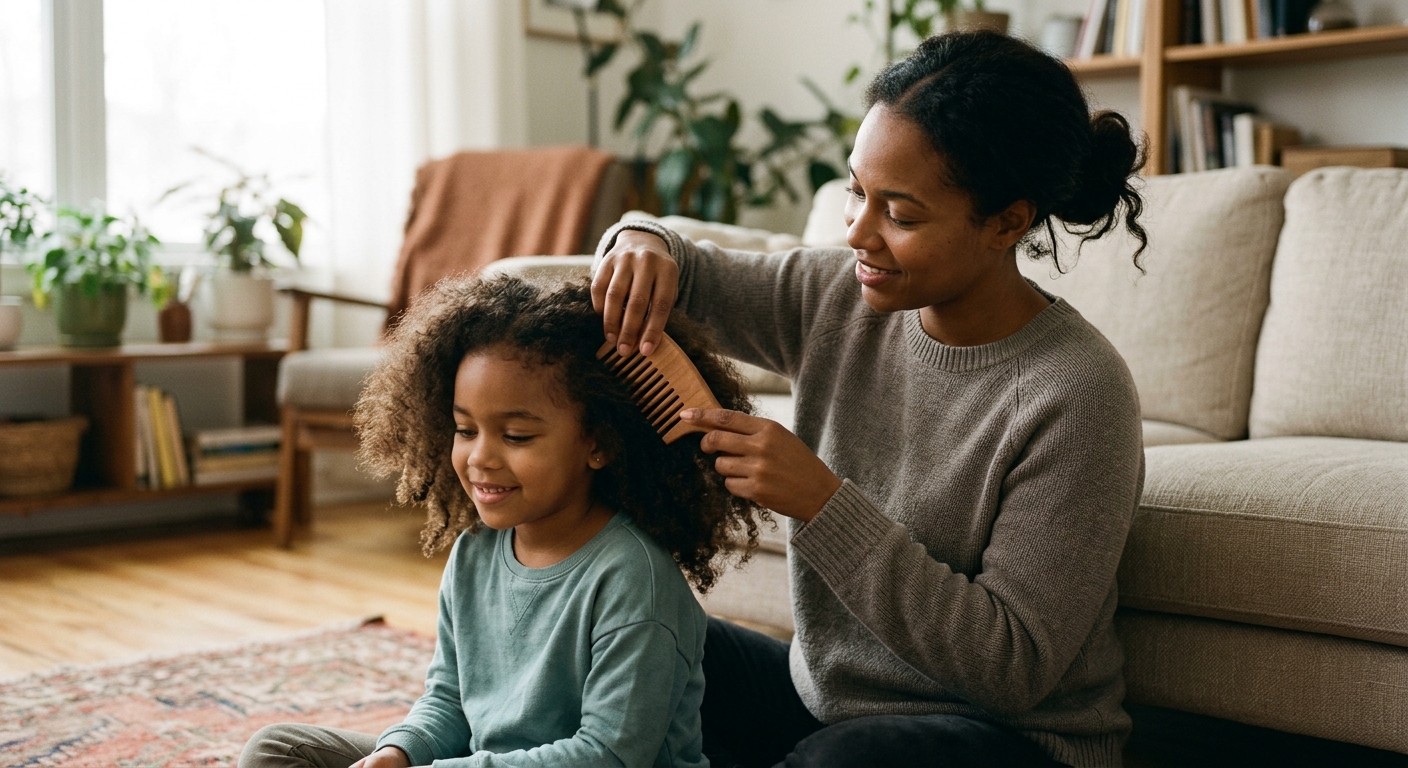
Appointments generally take between two and three hours depending on the chosen design and hair thickness. Because washing, deep conditioning, and blow drying are included, clients skip at-home preparation entirely. Che works without rushing, taking short breaks whenever a child needs to stretch or rest.
How can parents prepare sensitive children for their appointment?
Talk through the process a day or two in advance. Let your child know that Che will wash, dry, and gently braid their hair in a quiet private suite. Bringing a favorite comfort item, tablet, or snack helps maintain a calm, familiar atmosphere throughout the visit.
Giving Your Child a Calm, Tear-Free Braiding Day
Hair day does not need to feel like an emotional battle for your household. Tears belong nowhere near healthy protective styling. When tension remains minimal and your stylist listens to small cues, your child learns that salon visits are peaceful spaces rather than something to dread. Comfort comes first.
What changes when you remove the loud chatter of a standard salon floor? Che hosts every young client inside a private Jonesboro suite where your child receives undivided attention (and plenty of patience) from the wash basin to the final braid. The difference is clear. Every appointment includes complete prep work: gentle washing, thorough conditioning, and careful blow drying with proper heat defense. Because this care is built into the booking, you do not have to spend your Friday evening detangling tender curls at the bathroom sink.
Styles like knotless braids and flat cornrows let kids stay active through school sports, recess, and weekend play without heavy extensions weighing down their crowns. When you follow up with light scalp oil and a secure satin bonnet at night, those braids stay clean for weeks without causing itchiness or hairline flaking. Your child walks away with neat, sensory-safe braids that protect natural curls without pulling at delicate baby hair. Their scalp stays happy. You get hours back in your family schedule, knowing their hair received patient care from hands that respect young scalps.