

Pain is never proof of good braiding. If your scalp throbs for days after leaving the chair, your braids are likely too tight and may be stressing your hairline. True protective grooming preserves your follicles while delivering an immaculate finish. Men looking for men’s braids in Jonesboro, GA no longer need to sit through crowded, rushed salon sessions. This guide details proper pattern selection, scalp preparation, and realistic aftercare routines designed for working men across Clayton County (and neighboring South Metro cities). You will learn how private studio appointments protect your time and support natural growth without redness, bumps, or awkward regrowth phases.
Redefining Professional Grooming: The Rise of Men Braids in Jonesboro GA

Boardrooms across Clayton County and South Metro Atlanta look different today. Corporate directors and founders no longer spend Sunday nights flattening their natural hair to meet outdated office expectations. Clean parts and well-kept braids command respect on their own terms.
Balancing Corporate Polish with Cultural Authenticity
How do you maintain an executive standard while honoring your personal identity? The answer lies in disciplined maintenance. When box braids or cornrows carry sharp symmetry and a fresh taper, they communicate authority instantly. Men working along the Interstate 75 corridor (especially those commuting from Hudson Bridge Road or driving up Tara Boulevard to corporate offices near Hartsfield-Jackson) also gain practical hours each week. A structured protective style shields hair from dry cabin air during business flights. It stops daily comb damage. You wake up ready.
Why South Metro Leaders Choose Jonesboro Over Hectic Mid-City Salons
Midtown Atlanta salons bring traffic jams, paid parking decks, and loud open floors. Jonesboro provides a calmer alternative for working professionals:
- Private suites where you can work or rest in quiet
- Direct scheduling with dedicated start times and zero double-booking
- Quiet studio spaces free from retail salon chaos
Sitting in a private suite turns grooming into a productive pause rather than an all-day chore. You preserve your focus, your energy, and your weekend schedule.
Precision Patterns: Selecting the Right Men’s Protective Styles
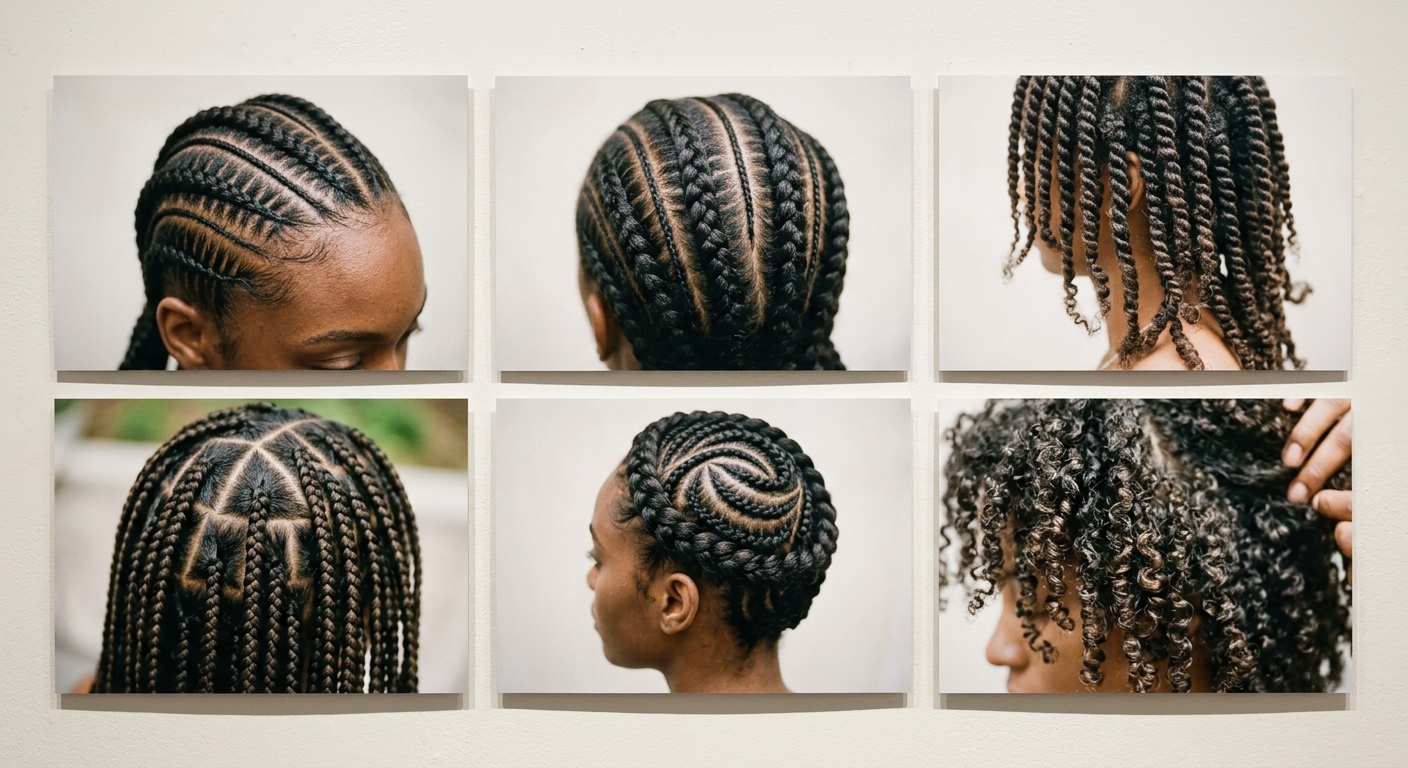
Geometric parts do more than organize hair. Clean lines direct the eye, balancing a square jawline or softening an oblong profile. Which pattern makes the most sense for your weekday schedule? Stitch braids offer a defined profile for high-stakes presentations, but two strand twists give you natural texture with less morning management.
Stitch Braids Versus Two Strand Twists
Stitch braids anchor hair close against the scalp using thin, horizontal tension sections. They hold distinct lines for roughly three to four weeks. If your work calendar demands crisp symmetry across back-to-back client meetings, stitch lines deliver that tailored, razor-sharp edge without shifting.
Twists operate differently. Two strand twists hang freely, offering natural movement and a softer outline that works well in modern business environments. They also handle moisture better during mid-day workouts.
- Stitch braids: Last three to four weeks, require zero morning styling, and keep scalp parts exceptionally distinct.
- Two strand twists: Last four to six weeks, adapt easily to casual settings, and reduce tension on sensitive temples.
Taper Fades with Barrel Twists
If you wear a fade, your barber handles the sides while your braider focuses on the hair on top for twists or cornrows. This perimeter separation prevents the braider from pulling vulnerable baby hairs along your temples. And because edge lines grow out faster than plaits, a quick bi-weekly perimeter touch-up keeps the entire style sharp without disturbing the center work. (Your stylist will thank you for keeping that border clean.)
While styling establishes your look, preserving your hairline requires understanding the mechanical stresses placed on your scalp.
Scalp Biomechanics: Protecting Follicles and Preventing Traction Alopecia
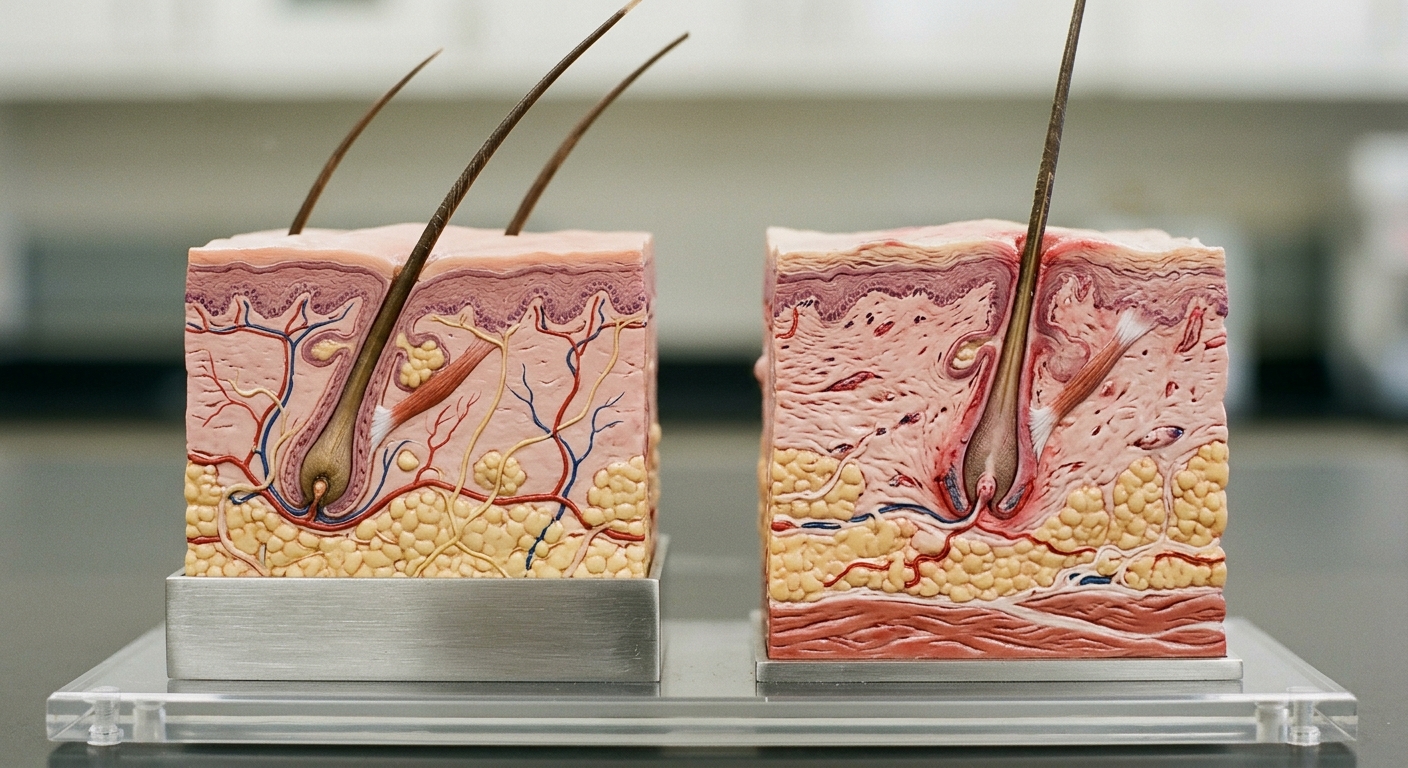
Hair follicles are living organs anchored inside the dermis. When braids pull harder than your hair roots can handle, the scalp becomes inflamed. If ignored, repeated physical strain turns into permanent scarring, choking off new hair production completely.
The Mechanics of Hair Follicle Tension Around the Perimeter
Perimeter follicles are naturally finer and possess shallower roots than the hair at the crown. Pulling edges tightly does not make braids last longer; it just stresses the roots. Have you ever felt a sharp, throbbing ache along your temples right after leaving the chair? That pain signals mechanical trauma. Watch for these early indicators of follicular distress:
- Tension bumps or minor folliculitis clusters erupting within forty-eight hours.
- Localized redness accompanied by a shiny, stretched appearance along the skin surface.
- White keratin casts sliding up the hair shaft due to root sheath detachment.
Preventing Traction Alopecia and Managing Georgia Humidity
Professional braiders safeguard your hairline by anchoring each plait to a balanced base rather than torquing hairline edges. They adjust grip tension based on hair density instead of forcing uniform tightness across different zones of your head. But external weather also affects scalp stability. Regional heat and humidity provoke heavy perspiration, which mixes with natural sebum to trap bacteria around irritated follicular openings. Do not smother your scalp under thick, petroleum-based grease. Instead, mist your parts with witch hazel or a lightweight antimicrobial tea tree spray to keep the pores breathing freely.
Post-Gym Sweat Care and Georgia Weather Shifts
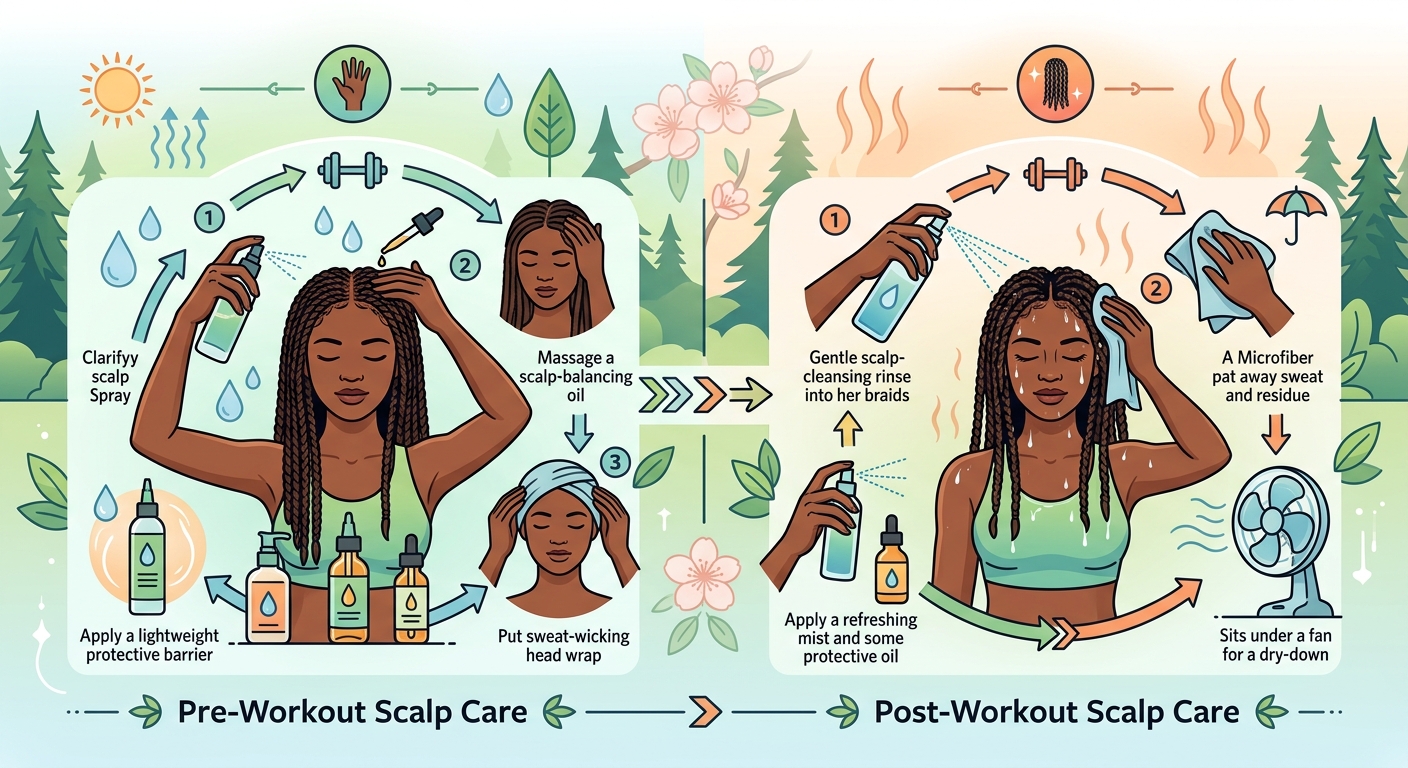
Working out along Highway 138 or training in South Metro fitness clubs brings heavy sweating. Perspiration contains sodium and lactic acid. Left alone on an unwashed scalp beneath tight braids, dried salt crystals dehydrate the hair shaft and trigger intense itching.
Managing Sweat After Intense Training
Do not jump straight into a hot shower and soak your braids without a plan. Saturated braids take hours to dry, and trapped dampness against the scalp breeds fungal issues. Follow this three-step post-workout protocol:
- Leave your sweatband or durag on for fifteen minutes after training until your skin cools down and initial sweat evaporates.
- Dab your exposed grid lines with a clean microfiber towel soaked in diluted witch hazel to lift salt crystals without disturbing plaits.
- Run a hand-held blow dryer on the cool setting across your roots for three minutes to eliminate residual dampness.
Navigating Summer Humidity and Winter Dryness
Georgia summers produce heavy air that causes natural hair to frizz out of fresh braids prematurely. Counteract ambient moisture by pressing a light styling mousse over your plaits and tying them down under a silk scarf for ten minutes each morning. Conversely, winter brings dry cold that strips moisture from ends. Switch to a water-based leave-in mist followed by two drops of jojoba oil every three days during colder months to keep strands pliable.
The Client Prep Blueprint: How to Prep Hair for Braids Men Trust
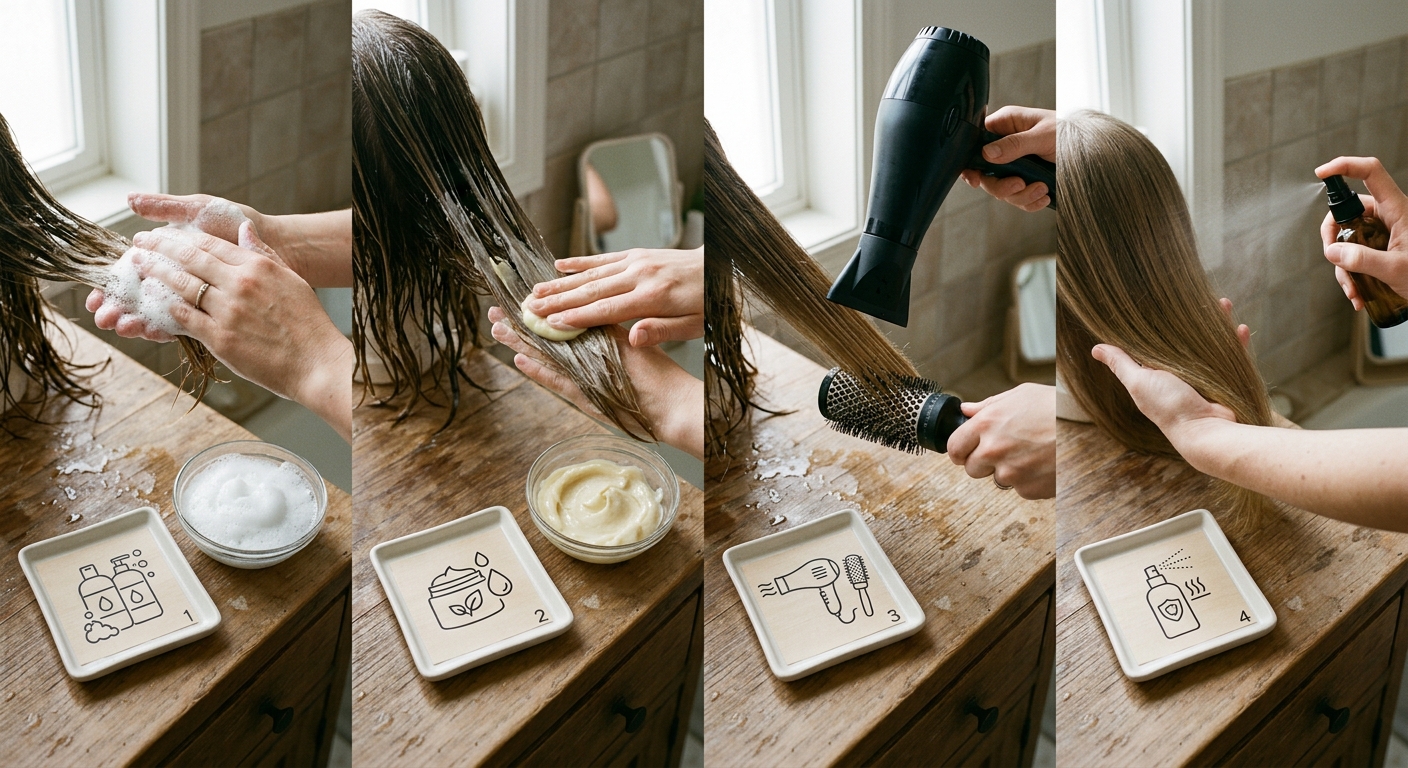
Clean hair determines how long a set lasts. Heavy holding pomades and residual grease cling to root bases, creating white flakes forty-eight hours after installation. Shampoo and blow dry are included with your service, so just arrive free of heavy pomade and grease. This step purges old silicone coatings, environmental grime, and built-up sweat from local workouts.
Clarifying Protocol and Deep Hydration
Have you ever noticed your scalp itching only three days into a fresh install? That discomfort usually stems from trapped residue sealed beneath tight sections rather than the styling technique itself. Follow the clarifying wash with a rinse-out deep conditioner for fifteen minutes (preferably under a warm shower cap). This step restores strand elasticity. Hydrated hair stretches without snapping under tension, protecting natural length over months of wear.
Tension-Free Blow Drying and Studio Etiquette
Never arrive with damp roots left to air-dry into shrunken coils. Air-dried texture causes snags, uneven grid lines, and unnecessary discomfort while the stylist parts your hair. Blow-dry the strands completely from ends to roots using medium heat and a wide-tooth comb attachment to stretch the curl pattern out.
- Do: Arrive with detangled, thoroughly dried hair free of raw butter or thick gels.
- Do not: Coat your scalp in heavy grease before your appointment, which makes gripping strands slippery and difficult.
Once your hair is prepped and primed, the studio setting dictates whether your grooming day is an exhausting chore or an elevated ritual.
The Executive Experience: Choosing a Private Braider Suite in Jonesboro
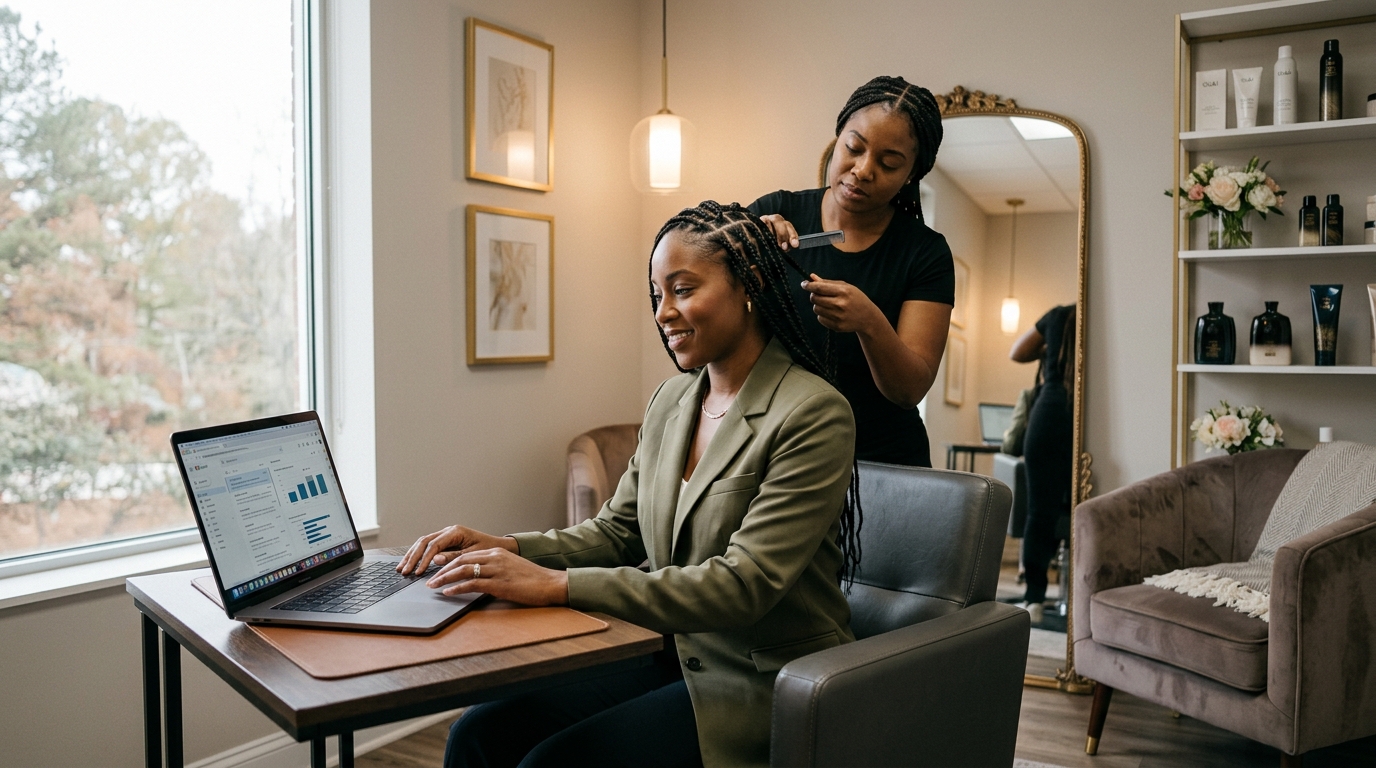
Communal barbershop queues often mean unpredictable schedules, background noise, and wasted Saturday mornings. For professionals managing heavy workloads across Clayton County, booked studio suites offer an orderly alternative where your appointment time is respected from the moment you park.
The Luxury Difference of a One-on-One Studio
Solo operator suites run on strict calendar reservations. You step into a dedicated chair without an audience, so you can catch up on work or simply relax. Stylists operating in private suites manage their own books rather than double-booking chairs. This setup guarantees individual focus on your hair density, parting lines, and scalp comfort throughout the entire service.
Salon Etiquette and Efficiency for Working Men
A seamless salon visit relies on mutual professional respect. What should you expect when booking private Men’s Hair Twists in Clayton County?
- Deposit policy: Slayy By Che requires a non-refundable deposit that is applied to your total, and you can reschedule once on that deposit.
- Punctuality: Arriving ten minutes early ensures your consultation starts on time without compressing your stylist’s afternoon schedule.
- Direct communication: Discuss your office dress code or travel schedule during the initial consultation so your stylist can suggest the best parting size for your routine.
Professional braiders also provide specific aftercare advice tailored to your scalp type before you step out the door. Maintaining protective styling longevity keeps you looking sharp between visits.
The 4-Week Maintenance Protocol: Scalp Care for Braids Men Rely On
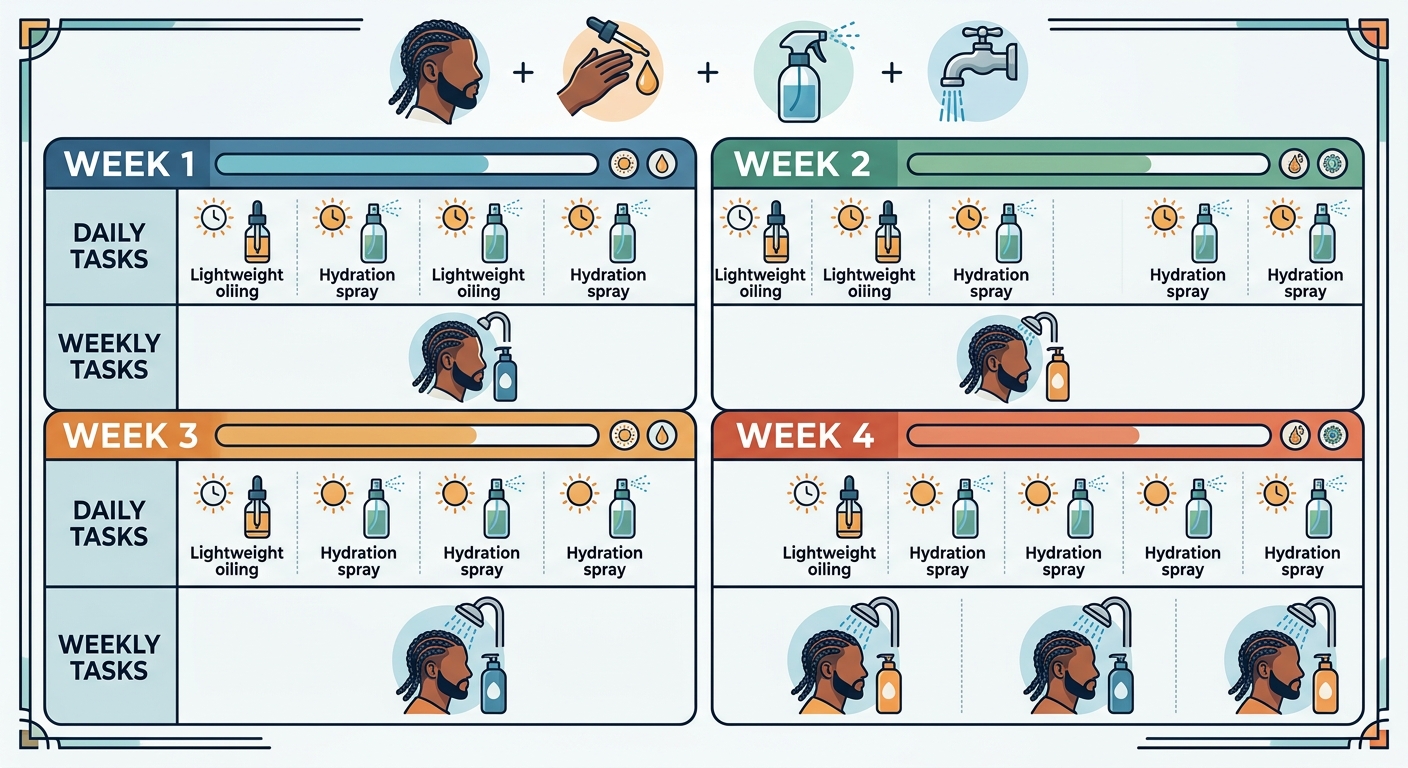
Walking out of the suite with crisp parts is only the starting point. How do you keep those lines clean while preventing irritation under the Clayton County sun? A daily two-minute routine protects both your look and your scalp.
Daily Hydration and Lightweight Oil Application for Itch Relief
Heavy petroleum greases suffocate hair follicles, trapping ambient dust and sweat against the skin. Instead, mist your exposed skin lightly with a botanical spray (such as aloe vera water or rosewater) each morning. Follow this dampening step with two to three drops of lightweight jojoba or squalane oil worked along the parts with your fingertips. This simple barrier seals in moisture without forming an occlusive film over the pores.
Nighttime Friction Defense
Friction is the fastest route to fuzzy parts and snapped edges. Tie down your hair with a breathable silk or satin durag every single night before your head touches the pillow. If your durag slips off during sleep, a satin pillowcase provides a reliable safety net against rough cotton sheets.
Safe Takedown Blueprint: Step-by-Step Strand Preservation
The way you remove your braids matters as much as the way they were installed. Rushing through takedown shears hair off at the root, throwing away weeks of retained growth.
- Saturate the plaits: Spray your braids with warm water and a slip-enhancing detangler before touching a single strand. Never take down bone-dry braids.
- Unravel with fingers first: Start at the very tips of the plaits and pick them apart gently using your fingers or the plastic tail of a rat-tail comb. Avoid metal tails, which cut into fragile hair.
- Clear shed hair clusters: As you release each braid, you will encounter a small bulb of shed hair and lint trapped at the base. Gently tease this buildup apart with your fingers before combing. If you wet this cluster without clearing it first, it mats into an intractable knot.
- Wide-tooth comb detangle: Work in small sections from ends up to the roots using a wide-tooth comb.
- Clarify and condition: Cleanse your scalp thoroughly to lift accumulated dead skin cells, followed by a protein-moisture balancing mask.
Frequently Asked Questions About Men Braids in Jonesboro
How long do men braids take to install?
Most traditional styles, including stitch cornrows and two strand twists, take between ninety minutes and two and a half hours. More complex geometric designs or individual box braids on thick hair can extend toward three hours. Private studio appointments guarantee that your allotted time is spent actively in the chair rather than waiting on intermediate clients.
How often should men wash braids?
Wash your braids every two to three weeks if you wear them for four to six weeks. Focus solely on cleansing the scalp. Dilute your shampoo in an applicator bottle, run the nozzle directly along your parts, massage with the pads of your fingers, and rinse thoroughly under low water pressure. Dry the roots completely with a hooded or hand-held dryer.
How long can men safely keep braids in?
Four to six weeks represents the absolute safety ceiling. Leaving braids past six weeks allows shed hairs (which naturally drop at fifty to one hundred strands per day) to wrap around neighboring roots, creating severe locing and root matting.
Will braids pull back my hairline?
Braids are much less likely to cause hairline thinning when they are installed with balanced tension and delicate edge hairs are left free. Thinning is most often linked to braids that are too tight or worn too long. If you notice thinning, see a dermatologist.
Can I get braids with short hair?
Stylists can grip natural hair starting at three to four inches of stretched length. Shorter hair requires smaller parting grids to ensure the plaits hold without slipping.
Setting the Standard for Men’s Braids in Jonesboro
Executive grooming in Clayton County no longer demands shaving down to a low fade every Thursday evening. Clean lines and neat braids carry equal authority across boardroom tables, construction job sites, and weekend functions. What separates a style that protects your hair from one that damages your edges? The difference comes down to balanced tension and deliberate preparation. Many men tolerate severe soreness because they assume tight cornrows simply demand a trial period. They do not. Tight pulling damages the root and starves follicles of proper blood flow. Tension should feel secure without triggering headaches or raising tender white bumps along your temple line (a clear sign of impending traction alopecia).
Arriving at your session with clarified, blown-out strands (completely free of heavy grease or beeswax) allows your braider to section hair cleanly without pulling at knotted ends. And that attention to detail extends to the environment itself. At SlayyByChe, our private Jonesboro suite gives you space to answer work emails or unwind without the noise of a crowded storefront. You receive deliberate, one-on-one care tailored directly to your texture and scalp condition. Schedule your men’s braids or twists at slayybyche.com/book-appointment for precise, gentle styling that protects your hairline.